The whole game fits in one map, one hourly rendezvous and wrecks to search. Here are the rules as designed today; they change from season to season, and the roadmap tells what is coming.
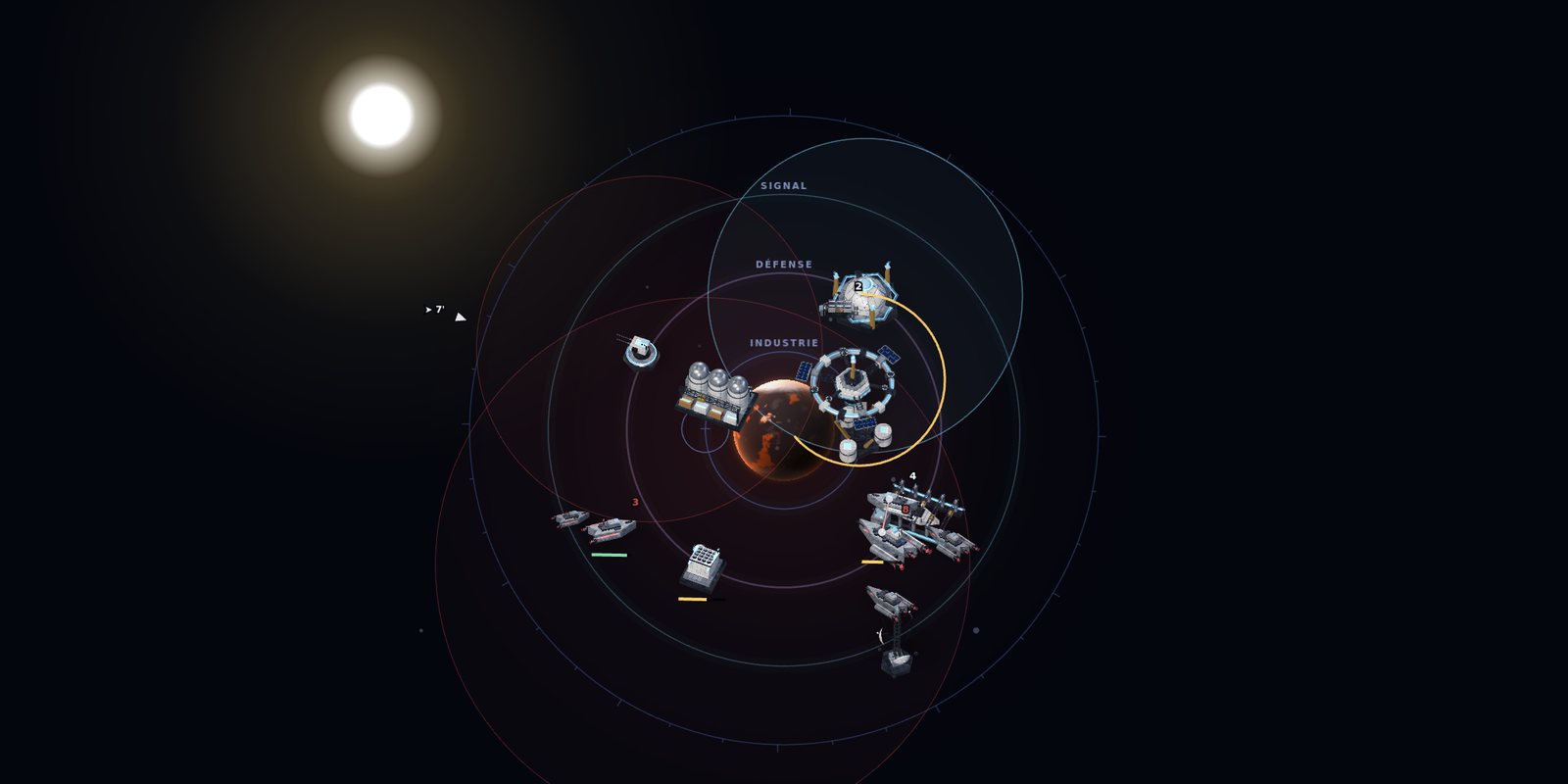
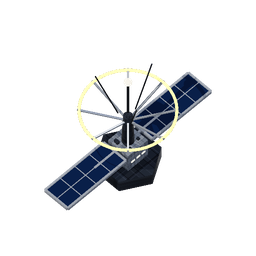
The galaxy is a board of hexagonal sectors, 469 in a full galaxy, each holding ten to sixteen star systems. A relay links two systems; it costs Metal and Energy, takes two to twenty minutes depending on its length, and reaches 260 units, half again as far from a pulsar. A system only produces, builds and scores if a path of active relays leads to your capital: cut one relay and everything behind it goes dark. Every relay burns Energy at each Draw, and that upkeep grows faster than the number of relays, so a Network too big for its energy loses its farthest relays first. The real skill is topology: find your bridges, double them, hold the chokepoints, do not overreach. Nebulae double the cost; black holes cannot be crossed.
Four resources are traded: Metal (relays, buildings, hulls), Energy (relays and fleets, plentiful at the core, scarce at the rim), Food (population and crews, plentiful at the rim, scarce at the core) and Crystal (Beacons, heavy units, technology, rare and clustered near the centre). A fifth, Influence, cannot be traded: it pays for treaties, decrees and agents. Nobody is self-sufficient, by design. Every hour, on the minute, the server draws three bands out of eight, the same for the whole galaxy: a system whose band comes up produces three times its yield, the others once. No dead hours, only good ones. One Draw in twelve carries an event: an Eruption that quintuples a band, a Storm that shortens a region's relays, an Echo that makes a Beacon emit.
Trades are placed during the hour and all settle at the Draw. Nobody has a speed advantage. Each region has its Market with an order book per resource, in Credits, and a single settlement price per resource and per hour: “I sell 40 Food for at least 3” is enough. Prices differ between regions, and arbitrage rewards those who enjoy it. Direct barter between two Colonies exists too, executed at the Draw. The 5% fee is destroyed; a Trading Post lowers it, the Guild halves it. Your General can run the Market for you: “always keep 200 Energy ahead, sell surplus Food above 4”.
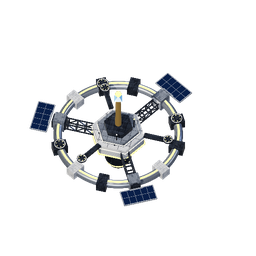
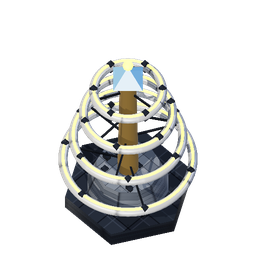
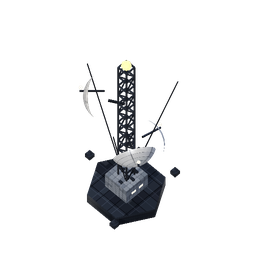
Each system offers one to three slots and six buildings, each explained in one line: the Extractor (yield +50%), the Shipyard (builds ships), the Bastion (−35% damage within its range, −50% during the Night Watch; shields adjacent relays), the Trading Post (one more market region, lower fees), the Amplifier (+25% range from here) and the Antenna (reveals neighbouring sectors). The capital has three extra slots and the Academy, which promotes your General. No tech tree: depth comes from the map, not from menus.
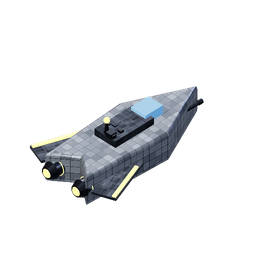
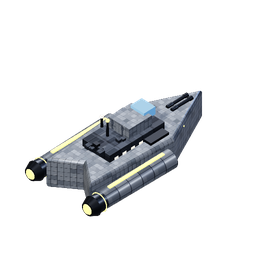
Combat is legible, slow and repairable. Three units in rock-paper-scissors: the Corvette raids and cuts relays, the Frigate escorts and defends, the Cruiser besieges and blockades. A fleet moves at full speed along relays and at half speed off the Network while burning Rium, so an attack on an unlinked neighbour is seen coming. Five orders, each with its arrival time: go to, raid a relay, blockade a system, defend, return. Combat runs continuously, salvo after salvo, with a ±10% roll per salvo: you can retreat or switch targets during the engagement, and the report is public, told by both Generals. A raid cuts a relay for six hours; twelve hours of blockade capture a system, except a capital, which can never be taken. Three protections: a shield at creation of three hours per day of season (21 hours in a seven-day season, 72 at most), a daily eight-hour Night Watch when the Bastion stops 50% of the damage instead of 35%, and no loot from a Colony three times smaller than you. Three agent missions paid in Influence: spy on a sector, sabotage a relay, send an envoy.
Up to twenty Colonies form an alliance, with a name, a crest, a charter and a shared score. Treaties are paid in Influence: a seven-day non-aggression pact, a fee-free trade pact, transit over each other's Network, and the Federation, which merges scores for the season victory. Decrees are public: diplomacy reads intentions in other people's decrees. Breaking a treaty costs, is seen, and Generals remember it from one season to the next.
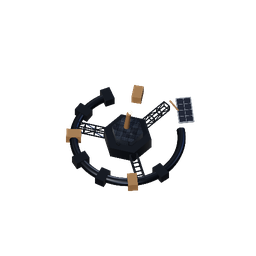
A wreck appears as a point of interest in a system you know. You send a team of four units, each with a specialty: the Scout walks twice as fast; the Engineer restarts the reactor, routes power, restores gravity, seals breaches and clears debris; the Signal Technician tunes nodes, decodes doors and handles ancient mechanisms; the Logistician manages scarce resources, wakes the fleet in stasis and alone carries a core too heavy for the others. Outside its specialty, an action costs one more unit of time.
A unit walks from room to room through open doors, then works; all four act at the same time on a shared clock, and time can be paused. The local Silence arrives at an announced time, then closes the sections one by one: a unit left in a closed section is lost. The objective, the Signal core or the bridge, is taken when a unit stands in it and the way home holds. Brought back to the hangar, it becomes the expedition's loot, which then travels the Network to your capital. The game shows at all times the actions required for the objective and the deadline of each.
Your General remembers everything you live through together, but not its life from before the Silence. Once its first memories have come back on their own, the next ones only return in a Séance. You need an Echo, a voice from before the Silence picked up in a ruin (at most one per Draw, twelve per season), and a system linked to your capital to hear it in. A Séance uses up its Echo, whether it succeeds or not, and no orders are given during it.
You ask your questions freely, over three to six exchanges. The memory returns in three fragments: the image, always; the place, a clue (“a giant, near a pulsar”) that goes into the Archives if the Séance is not already held in the right spot; the meaning, only in the right place and with enough trust. Trust is measured by what you do (Séances seen through, advice followed, doctrine kept), never by what you say. A memory gives knowledge, sharper advice on its theme and, later, new doctrine conditions. At the Silence, unheard Echoes are lost; recovered memories stay.
Seven fixed systems near the heart of the Aurane, each with a name and a legend; Anchor, they say, was the first to fall silent. Relighting a Beacon means linking it to your capital and pouring in a mass of Crystal. A lit Beacon emits: relays within its radius reach farther, and it weighs heavily in the score. Hold all Seven at once for twenty-four hours and it is the Renaissance: the Signal returns, the season ends.
 AURANE
 Relay
 Station
 Derelict
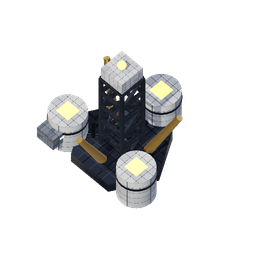 Extractor
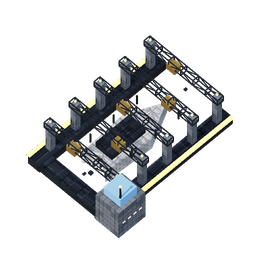 Shipyard
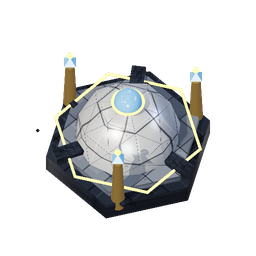 Bastion
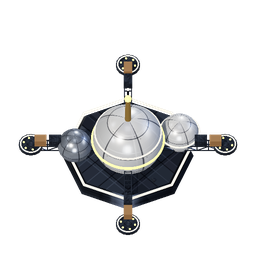 Trading post
 Amplifier
 Antenna
 Corvette
 Frigate
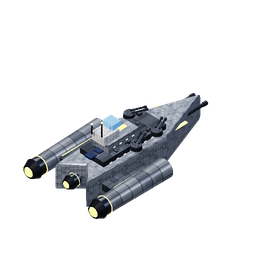 Cruiser
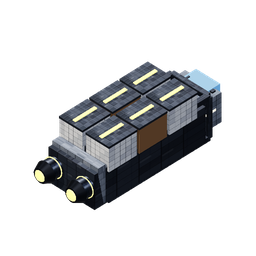 Cargo
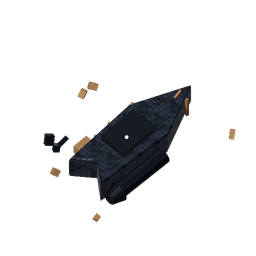 Wreck